
Physical activity is widely recognized as a fundamental pillar of psychological and physical resilience. However, after the age of 40, the physiological relationship between exercise, cortisol, and stress recovery changes. Extreme, high-intensity workouts that once provided relief can, if improperly balanced with recovery, elevate systemic stress. This editorial explores sustainable movement patterns, strength preservation, and how to make activity a source of restoration rather than another demanding obligation.
1. Movement as an Autonomic Reset
Engaging in moderate physical activity acts as a biological "stress inoculation." During exercise, the body safely mobilizes energy and engages sympathetic arousal. In the post-exercise recovery window, parasympathetic tone increases, promoting muscular relaxation, peripheral vasodilation, and reduced baseline anxiety.
For midlife adults, the primary challenge is matching exercise intensity with current life stressors. When professional or emotional demands are high, low-intensity steady-state movement (Zone 2 cardio, brisk walking, swimming) often yields superior neuroendocrine recovery compared to exhaustive high-intensity interval training (HIIT).
2. Preserving Musculoskeletal Health
From age 40 onwards, sarcopenia (the gradual loss of muscle mass) and age-related changes in joint connective tissue accelerate unless counteracted by progressive resistance training:
- Resistance Training: 2–3 weekly sessions focusing on compound functional movements (squats, hinges, pushes, pulls) preserves metabolic health, bone density, and postural integrity.
- Daily Walking: Accumulating 7,000 to 9,000 daily steps improves glycemic control, encourages daytime sunlight exposure, and breaks up prolonged sedentary desk hours.
- Mobility & Flexibility: Gentle mobility work supports joint lubrication and reduces chronic myofascial tension accumulated during desk work.
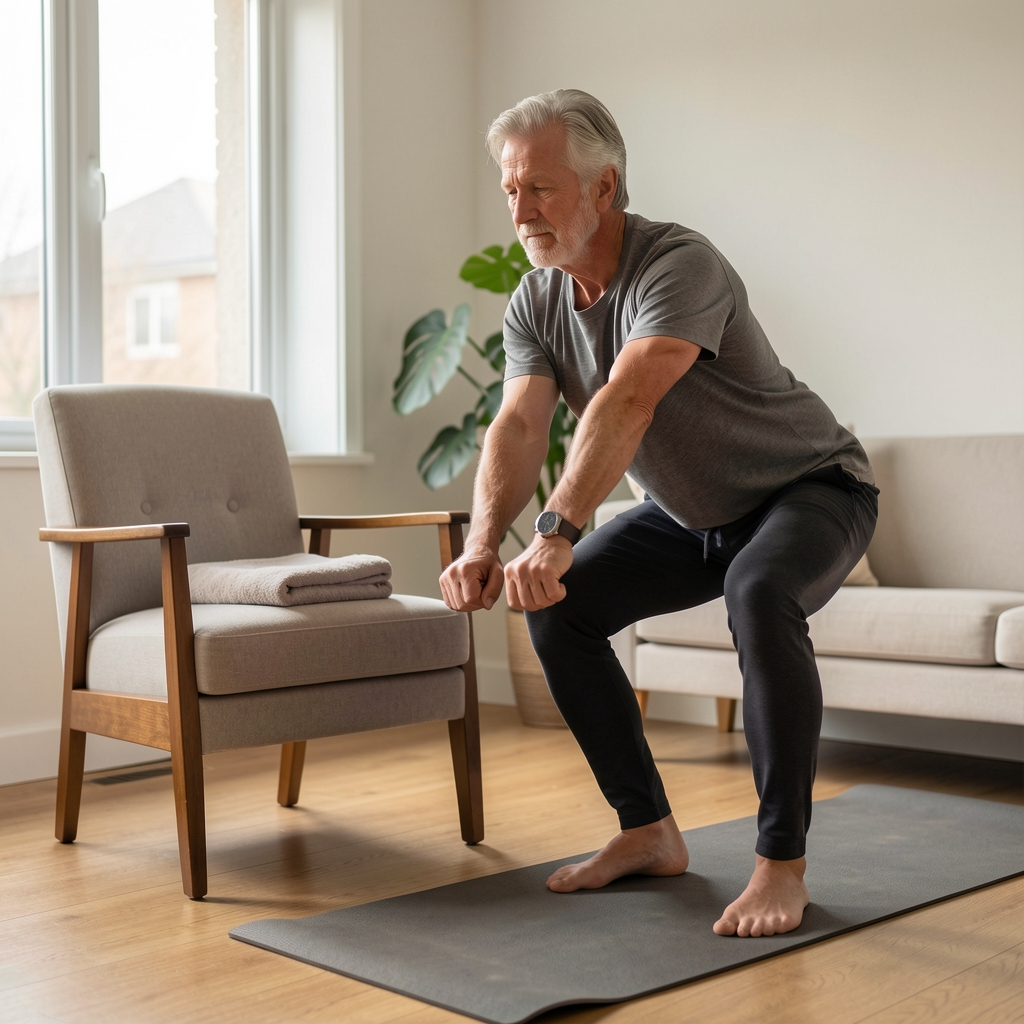
Home-Based Strength Routines
You do not need an intimidating gym environment. Bodyweight movements, resistance bands, or adjustable dumbbells at home provide ample stimulus to support muscular health and stress resilience.
3. Comparing Movement Modalities
| Activity Format | Primary Physiological Benefit | Key Planning Consideration |
|---|---|---|
| Brisk Outdoor Walking | Low cortisol impact, lymphatic flow, and daylight exposure. | Comfortable footwear and establishing a consistent daily route. |
| Progressive Strength Work | Maintains lean muscle mass and metabolic insulin sensitivity. | Allow 48 hours recovery between working the same muscle groups. |
| Swimming / Cycling | Cardiovascular endurance with low joint impact. | Pacing is crucial—maintain conversational breathing effort. |
| Mobility / Gentle Yoga | Enhances parasympathetic tone and joint range of motion. | Focus on steady nasal breathing rather than extreme flexibility. |
4. Warning Signs of Overtraining in Midlife
- Persistent morning fatigue or feeling "wired but tired" at night.
- Unusual muscular soreness that lingers beyond 72 hours.
- Elevated resting heart rate upon waking.
- Deterioration in sleep quality or frequent night-waking.
5. Key Takeaways
- Exercise after 40 should prioritize consistency, joint longevity, and systemic recovery over exhausting extremes.
- Combine regular low-intensity daily movement (walking) with two to three moderate resistance sessions weekly.
- Listen to your body during periods of high life stress and scale back workout intensity when necessary.
Related Editorial Reading
Why Stress Responses Change After 40 · Mindfulness Practices and Wellbeing in Adults Over 40 · Magnesium and Stress: What Research Suggests